
Company Registration Mistakes: Top 10 Devastating Errors to Avoid (2026 Guide)

Table of Contents
Starting a new business is one of the most exhilarating experiences of a founder’s life. The rush of building a product, designing a brand, and acquiring your first customer is unmatched. However, in the excitement of launching, many founders rush through the legal paperwork, leading to devastating company registration mistakes.
The Ministry of Corporate Affairs (MCA) in India operates on strict, unforgiving regulatory frameworks. A single typo, a mismatched document, or a poorly structured capitalization table can result in immediate application rejections. Worse yet, some startup registration errors do not reveal themselves until years later—right when you are trying to secure venture capital funding or sell your company.
When investors conduct legal due diligence, the first thing they scrutinize is your foundational corporate structure. If they find gaping holes in your compliance, they will walk away.
At PC Media House, we have rescued countless startups from the brink of legal disaster. To help you navigate this complex journey, we have created the ultimate business incorporation guide. In this massive, 2,500-word cornerstone post, we are breaking down the top 10 company registration mistakes first-time founders make, how much they cost, and exactly how you can avoid them.
Mistake 1: Choosing the Wrong Corporate Structure
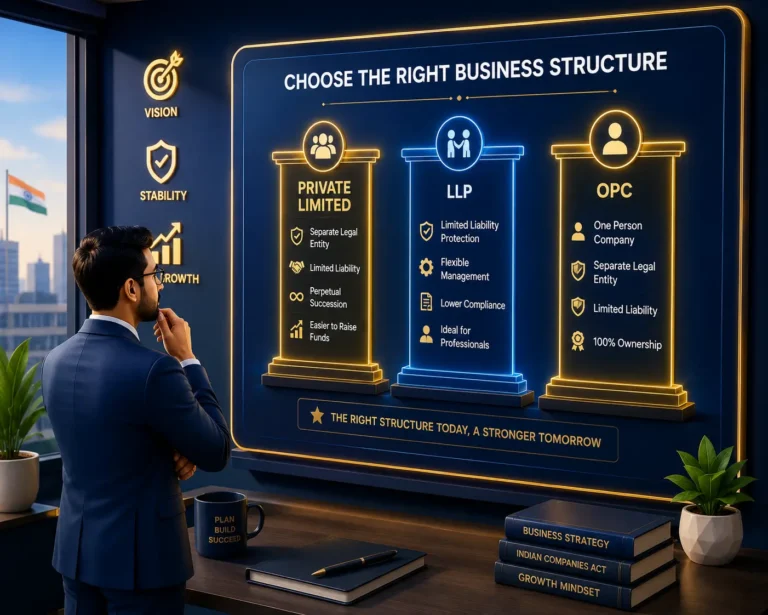
The absolute most common of all company registration mistakes is choosing the wrong legal entity for your long-term vision. Founders often choose a structure based on what is cheapest to register today, completely ignoring how it will affect their taxes and funding capabilities tomorrow.
In India, you generally choose between a Private Limited Company (Pvt Ltd), a Limited Liability Partnership (LLP), or a One Person Company (OPC).
If you plan to raise venture capital or offer Employee Stock Ownership Plans (ESOPs) to your team, you absolutely must register a private limited company in Delhi or your respective state. Investors categorically refuse to invest in LLPs because they cannot issue equity shares.
Conversely, if you are running a boutique consulting firm or a family-owned service business with no intention of raising external capital, registering a Private Limited Company might saddle you with unnecessary and expensive compliance burdens that an LLP could have avoided.
Comparison Table: Choosing the Right Structure
| Feature | Private Limited (Pvt Ltd) | Limited Liability Partnership (LLP) |
| Best For | High-growth startups, tech firms, funding | Agencies, professional consultants, family firms |
| Venture Capital | Highly preferred (Equity shares available) | Very difficult (No equity shares) |
| Compliance Cost | High (Mandatory audits, board meetings) | Low (Audits only after specific thresholds) |
| ESOPs | Can be easily issued to employees | Cannot be issued |
| Personal Liability | Limited to unpaid share capital | Limited to capital contribution |
Still on the fence about which entity fits your vision? Dive into our definitive comparison guide: Pvt Ltd vs LLP vs OPC: 7 Crucial Facts to Choose the Best Business Structure.
Mistake 2: Ignoring Trademark Searches Before Naming
Many founders fall deeply in love with a brand name, buy the domain, design the logo, and print the business cards—all before checking the government database. This is one of the most fatal company registration mistakes.
When you submit your company name for approval on the MCA’s SPICe+ portal, the Registrar of Companies (RoC) checks for two things: similarity to existing companies and similarity to existing trademarks.
If your proposed company name sounds phonetically similar to a registered trademark in your industry class, the MCA will reject your application outright. Even if the MCA accidentally approves it, the owner of the trademark can send you a Cease and Desist legal notice, forcing you to rebrand your entire company months after launch.
The Fix: Before filing your incorporation forms, you must conduct a deep, comprehensive search on the Official IP India Trademark Portal (DoFollow). If you need help building a legally viable identity, our expert branding and design services can ensure your brand is clear for registration.
Mistake 3: Unequal or Poorly Structured Equity Distribution
When two friends start a business, they almost always split the equity 50/50. While this feels fair on day one, it is one of the most dangerous company registration mistakes you can make.
A 50/50 split creates a mathematical deadlock. If the two founders disagree on a major strategic direction—like whether to sell the company, take on debt, or hire a specific executive—there is no tie-breaker. The company becomes paralyzed, operations halt, and the business dies.
Furthermore, if one founder leaves the company after six months, but they already legally own 50% of the shares with no vesting schedule in place, they get to keep half the company while the remaining founder does 100% of the work.
The Fix: Equity should be distributed based on value creation, capital invested, and future time commitment—not just friendship. Most importantly, always implement a “Founder Vesting Agreement.” This ensures founders only earn their shares over a 3 to 4-year period.
Mistake 4: Using an Unverified or Temporary Registered Office Address
To complete the company registration process in India, you are legally mandated to provide a verifiable Registered Office Address. This is where the MCA, Income Tax Department, and local courts will send official legal notices.
A common startup registration error is using a temporary address, a friend’s office, or an unverified coworking space without securing the proper legal documentation.
The MCA requires a utility bill (electricity, water, or gas) that is not older than two months, along with a formalized No Objection Certificate (NOC) signed by the legal owner of the property. If the name on the NOC does not perfectly match the name on the utility bill, your application will be rejected immediately.
The Fix: Ensure your address documentation is flawless. If you are operating remotely, you can legally use your residential home address as your registered office, provided you secure the correct NOC and utility bills from the homeowner.
Mistake 5: Failing to Define Clear Business Objectives in the MOA
The Memorandum of Association (MOA) is the supreme constitution of your company. It contains the “Object Clause,” which explicitly dictates the primary business activities your company is legally allowed to pursue.
One of the most frequent company registration mistakes is drafting an Object Clause that is either far too narrow or incredibly vague.
If your Object Clause only says “to develop mobile applications for restaurants,” and two years later you decide to pivot into manufacturing restaurant hardware, your company is legally operating outside its permitted scope. This is called an “Ultra Vires” act, and it can void your commercial contracts and expose directors to personal liability.
The Fix: Work with corporate legal professionals to draft a broad, future-proof Object Clause. It should cover your immediate primary business activities as well as any related, ancillary activities you might pivot into over the next five years.
Mistake 6: Overlooking Mandatory Post-Incorporation Compliances
Many founders celebrate the day they receive their Certificate of Incorporation (CoI), falsely believing that the legal work is finished. In reality, incorporation is just the starting line.
Ignoring post-incorporation compliance is arguably the most expensive of all company registration mistakes. The MCA imposes brutal financial penalties for missing initial statutory deadlines.
Within the first 30 to 180 days of incorporation, you must complete the following:
- Appoint an Auditor: You must hold a board meeting and appoint your first statutory auditor (a practicing CA) within 30 days of receiving your CoI.
- Deposit Share Capital: The founders must open the corporate bank account and deposit their committed share capital immediately.
- File Form INC-20A: You must file the Declaration of Commencement of Business within 180 days. You cannot legally sign contracts, hire employees, or take loans until this form is filed.
Failure to file INC-20A results in a ₹50,000 penalty for the company and ₹1,000 per day for every director. To avoid these massive fines, smart founders retain expert taxation and compliance services to manage their ongoing regulatory calendars.
Mistake 7: Not Securing Digital Signature Certificates (DSC) Properly
Because the entire company registration process in India is completely digitized, physical signatures on paper are no longer accepted by the MCA. Every proposed director and shareholder must obtain a Class 3 Digital Signature Certificate (DSC).
A frequent startup registration error is outsourcing this step to unverified, cheap third-party vendors who improperly store your DSC passwords or fail to conduct proper video KYC verifications.
Your DSC is your digital legal identity. If it falls into the wrong hands, unauthorized individuals can legally sign binding corporate documents, resign directors, or alter your company’s structure without your knowledge.
The Fix: Only procure your DSCs through trusted, government-authorized Certifying Authorities. Always maintain personal control over your encrypted USB tokens and never share your private DSC passwords via open email or WhatsApp.
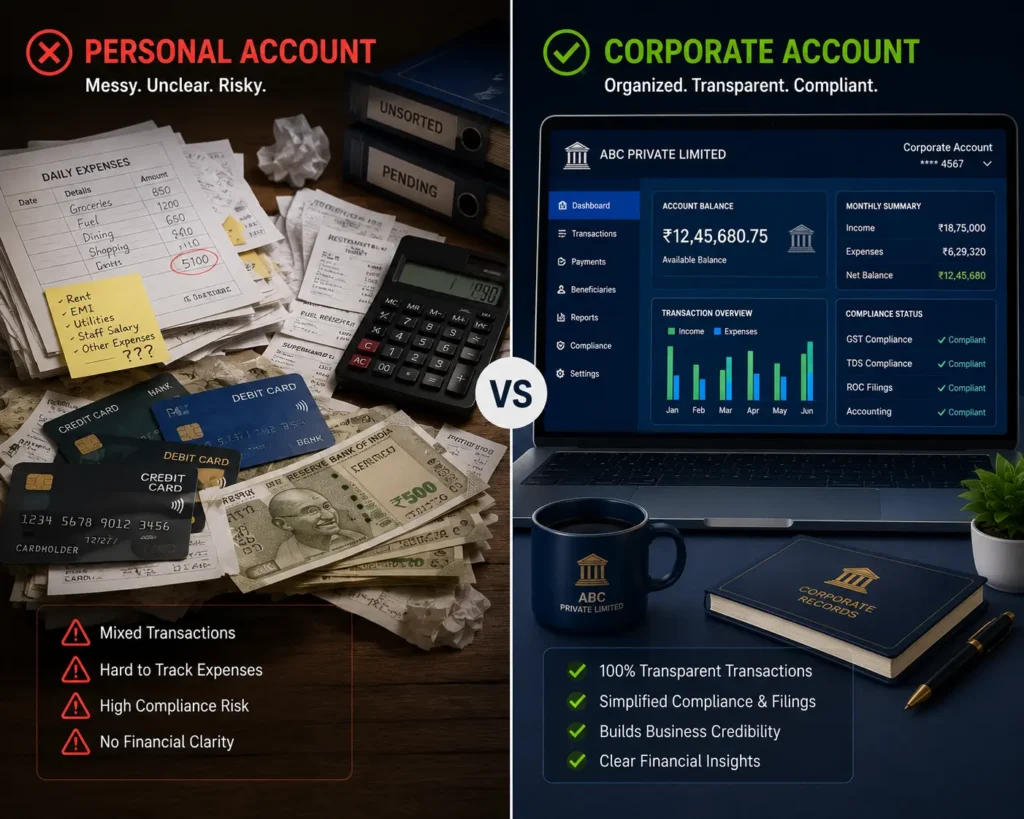
Mistake 8: Mixing Personal and Corporate Finances Immediately
The entire purpose of forming a Private Limited Company is to create a “separate legal entity.” This legal wall protects your personal savings, your home, and your personal assets from business creditors and lawsuits.
However, founders frequently commit severe company registration mistakes by piercing this corporate veil on day one. They pay for corporate server costs using their personal credit cards, or they accept client payments directly into their personal savings accounts because their corporate bank account is not set up yet.
When you mix personal and corporate funds, the courts and the Income Tax Department (DoFollow) can legally declare that the company is a sham. If the company goes bankrupt, creditors can argue that because you treated the company money as your own, your personal assets should be seized to pay off the debts.
The Fix: The moment your company is incorporated, open a dedicated current account. Fund the company strictly through formal share capital or documented director loans. Never use personal accounts for business transactions.
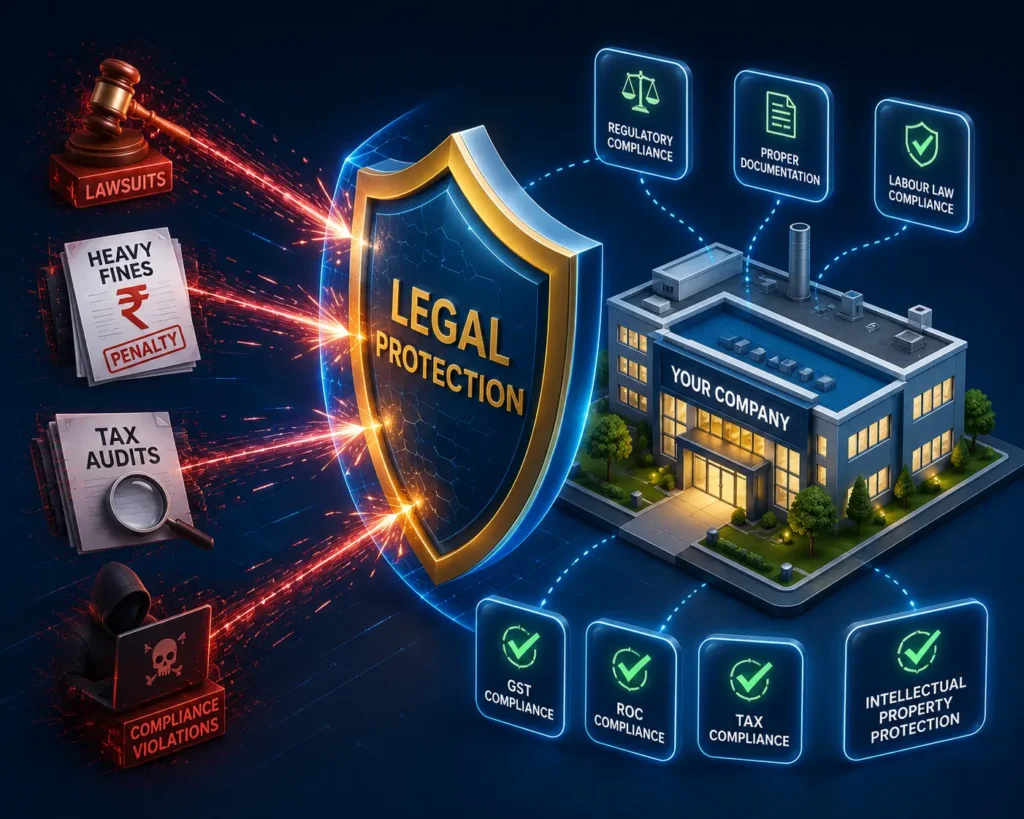
Mistake 9: Delaying Intellectual Property (IP) Protection
Incorporating your company name with the MCA does not give you absolute, nationwide rights to that brand name. The MCA only regulates corporate entities; it does not protect your consumer brand identity in the open market.
A tragic company registration mistake is assuming your IP is protected just because you have a Certificate of Incorporation. If a competitor sees your success, they can legally file a trademark for your brand name under the Trade Marks Act. If they secure the trademark before you do, they can force you to stop using your own logo and company name.
The Fix: Intellectual Property registration should happen simultaneously with corporate incorporation. To see exactly how to secure your brand, read our step-by-step guide on the Trademark Registration Process in India (Cost, Timeline & Documents). You must file for Trademark, Copyright, and Design protections immediately. Leverage professional legal and IPR services to build an impenetrable legal moat around your brand assets.
Mistake 10: DIY Registration Instead of Hiring Experts
We live in an era of YouTube tutorials and DIY articles. While being resourceful is a great trait for a founder, attempting to execute the company registration process in India by yourself is incredibly dangerous.
Founders often try to save ₹10,000 by drafting their own MOA and AOA using free templates downloaded from Google. These templates are usually outdated, missing critical legal clauses, and completely misaligned with the specific nuances of modern Indian corporate law.
When you DIY your incorporation, you almost guarantee that you will commit multiple company registration mistakes. A poorly drafted AOA can cripple your ability to onboard investors later, costing you millions in potential funding just because you wanted to save a few thousand rupees on day one.
The Fix: Corporate law is not the place to cut corners. Consider incorporation as your very first critical business investment. Hire highly experienced professionals to build a flawless, scalable legal foundation. If you are ready to do it the right way, check out our ultimate 2026 guide on How to Register a Private Limited Company in Delhi in 7 Easy Steps.
The True Cost of Mistakes: Why Professional Help is Mandatory
The true cost of startup registration errors is rarely felt immediately. The MCA portals might accept a flawed application, giving you a false sense of security.
The nightmare begins two years later during an investor audit, a tax scrutiny, or a founder dispute. Fixing foundational legal errors retroactively requires paying massive compounding government penalties, undergoing complex legal restructuring, and wasting hundreds of hours of your valuable time.
If you want to build a serious, scalable, and highly valuable enterprise, you must treat your legal framework with the highest level of respect.
Let PC Media House Build Your Flawless Foundation
Avoiding these top 10 company registration mistakes requires deep legal expertise, meticulous attention to detail, and a thorough understanding of the ever-changing MCA regulations. You should be spending your energy acquiring customers and building your product—not agonizing over SPICe+ web forms and compliance deadlines.
At PC Media House, we are your premier digital growth and business execution partner in Delhi NCR. We do not just file paperwork; we build robust, investor-ready corporate structures designed for massive scale.
Once your legal foundation is secure, we seamlessly transition your brand into the market through our elite business registration services in Delhi and cutting-edge digital marketing campaigns.
Do not let avoidable legal errors destroy your entrepreneurial dream before it even begins.
Contact PC Media House today for a free strategic consultation, and let our experts execute a flawless company registration process for your startup!
Frequently Asked Questions (FAQs) About Incorporation Errors
1. What are the most common company registration mistakes founders make?
The most common company registration mistakes include choosing the wrong business structure (like picking an LLP when you need VC funding), failing to conduct a trademark search before naming the company, using unverified registered office addresses, and ignoring mandatory post-incorporation compliances like filing Form INC-20A.
2. Can I change my company structure from an LLP to a Private Limited later?
Yes, you can legally convert an LLP into a Private Limited Company. However, this is a highly complex, time-consuming, and expensive legal process that involves asset valuation, heavy paperwork, and extensive MCA approvals. It is always better to avoid this startup registration error by choosing the right structure from day one.
3. What happens if I forget to file the Commencement of Business (INC-20A)?
Failing to file Form INC-20A within 180 days of incorporation is one of the most severe company registration mistakes. The MCA will impose a penalty of ₹50,000 on the company, plus an additional ₹1,000 per day for every director in default. Furthermore, the Registrar can initiate action to strike off the company entirely.
4. Do I need to trademark my company name if it is approved by the MCA?
Yes, absolutely. The MCA approval only prevents another company from registering the exact same corporate name. It does not give you intellectual property rights to use the name as a consumer brand. You must separately file a trademark application with the IP registry to secure exclusive nationwide ownership of your brand identity.
5. Why should founders avoid a 50/50 equity split?
A 50/50 equity split is a major business incorporation guide warning because it creates a mathematical deadlock. If the two founders disagree on a critical business decision, there is no tie-breaker, leading to operational paralysis. It is recommended to have a 51/49 split or introduce a dynamic vesting schedule based on ongoing contributions.
6. Can I use my home address as the registered office for my startup?
Yes, you can legally use your residential home address as your official registered office to complete the company registration process in India. You simply need to provide a recent utility bill (electricity or water) in the owner’s name, along with a formalized No Objection Certificate (NOC) signed by the homeowner.
7. What is the danger of downloading free MOA and AOA templates?
Using free, generic MOA and AOA templates from the internet is highly dangerous. These documents form the legal constitution of your business. Generic templates often lack critical clauses for investor protection, ESOP issuance, and specific business objectives. This mistake can lead to massive legal disputes and rejection by venture capital firms during due diligence.
8. Can my company exist without opening a corporate bank account?
No. While the company legally exists the moment you receive the Certificate of Incorporation, you must open a corporate bank account to operationalize it. The founding shareholders must deposit their initial share capital into this specific bank account to officially commence business operations and stay legally compliant.